Last summer I was fortunate to spend some time in Athens. While I was there I made a visit to the Hellenic National Archeological Museum. This is a large purpose built space on three levels that holds a wonderful collection of Greek treasures. You can take a virtual tour here below and is well worth a visit if you ever get the chance.
I was keen to see one exhibit in particular. Tucked away at the back of the ground floor is a room dedicated to artefacts recovered from an ancient shipwreck. Amongst the wreckage were statues, pots and parts of a clock-like device that's become known as the Antikythera mechanism.
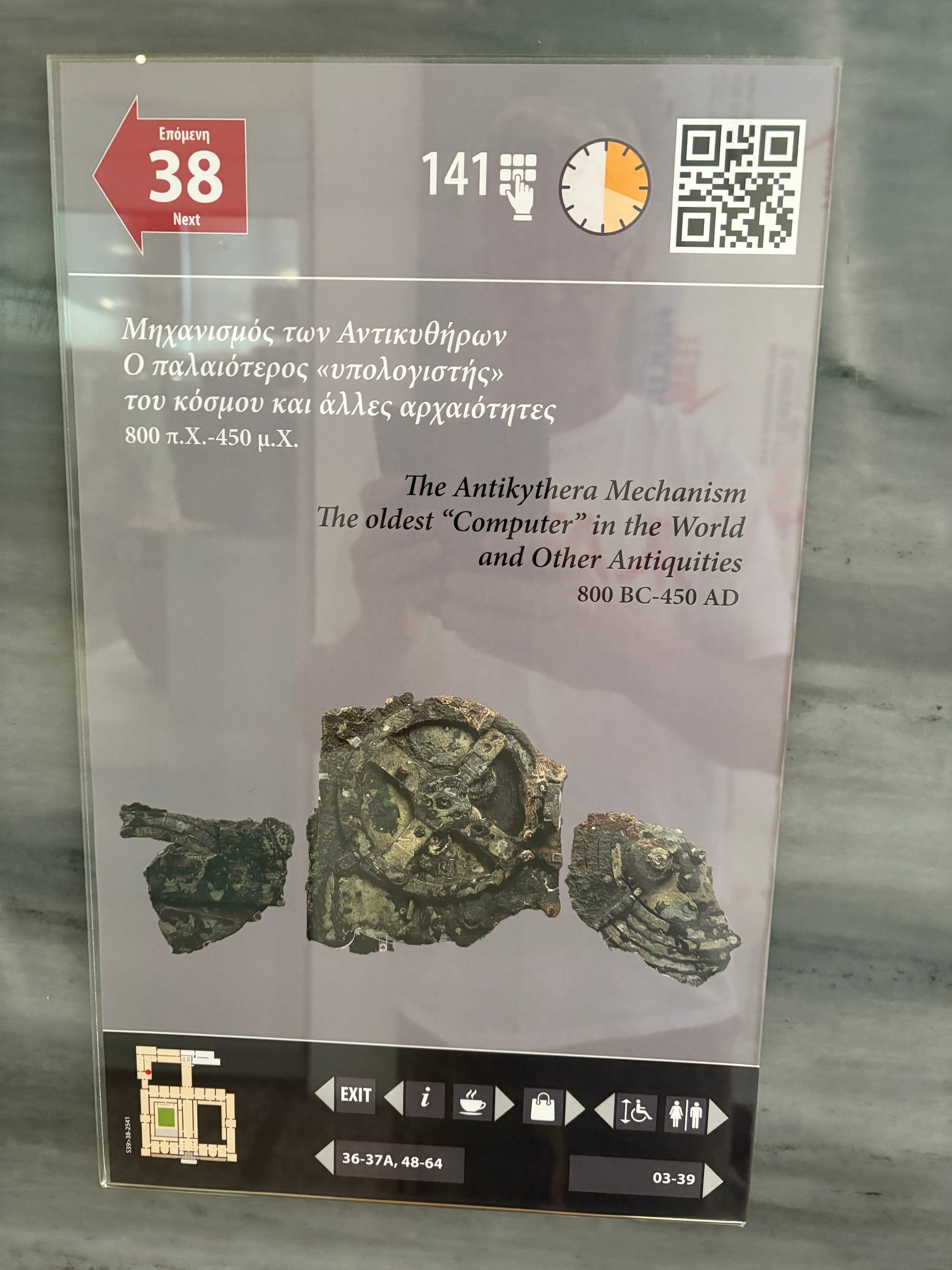
I first encountered the mechanism back in 2008.
As the story goes. in 1901 Greek sponge divers recovered the artefacts from a shipwreck just off the coast of the island of Antkythera. The mechanism was brought to the surface as a single lump and later separated out into a myriad of fragments.
After many years of patient investigation and huge improvements in the scientific tools available to study the pieces, it is believed the mechanism is the oldest known example of an analogue computer. It used a multi-geared mechanism to predict astronomical phenomena such as planetary positions and eclipses.
All the fragments are held within a single glass display case, are well lit, and can be viewed from all angles. Obviously two millennia at the bottom of the Aegean sea has done damage, but what remains is still astonishing. Much of the teeth on the cogged wheels are clearly visible, as are some of the tick markings.
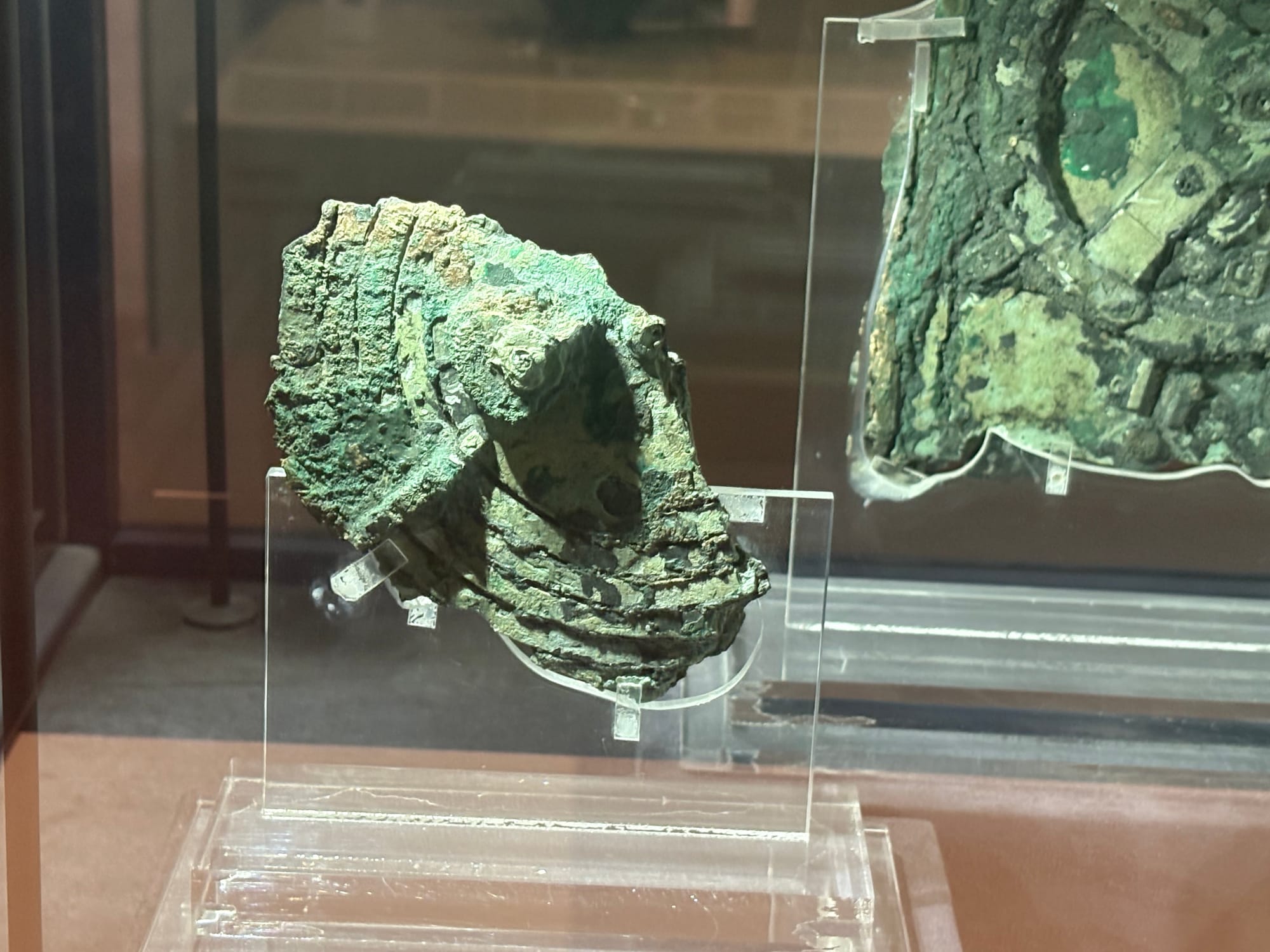
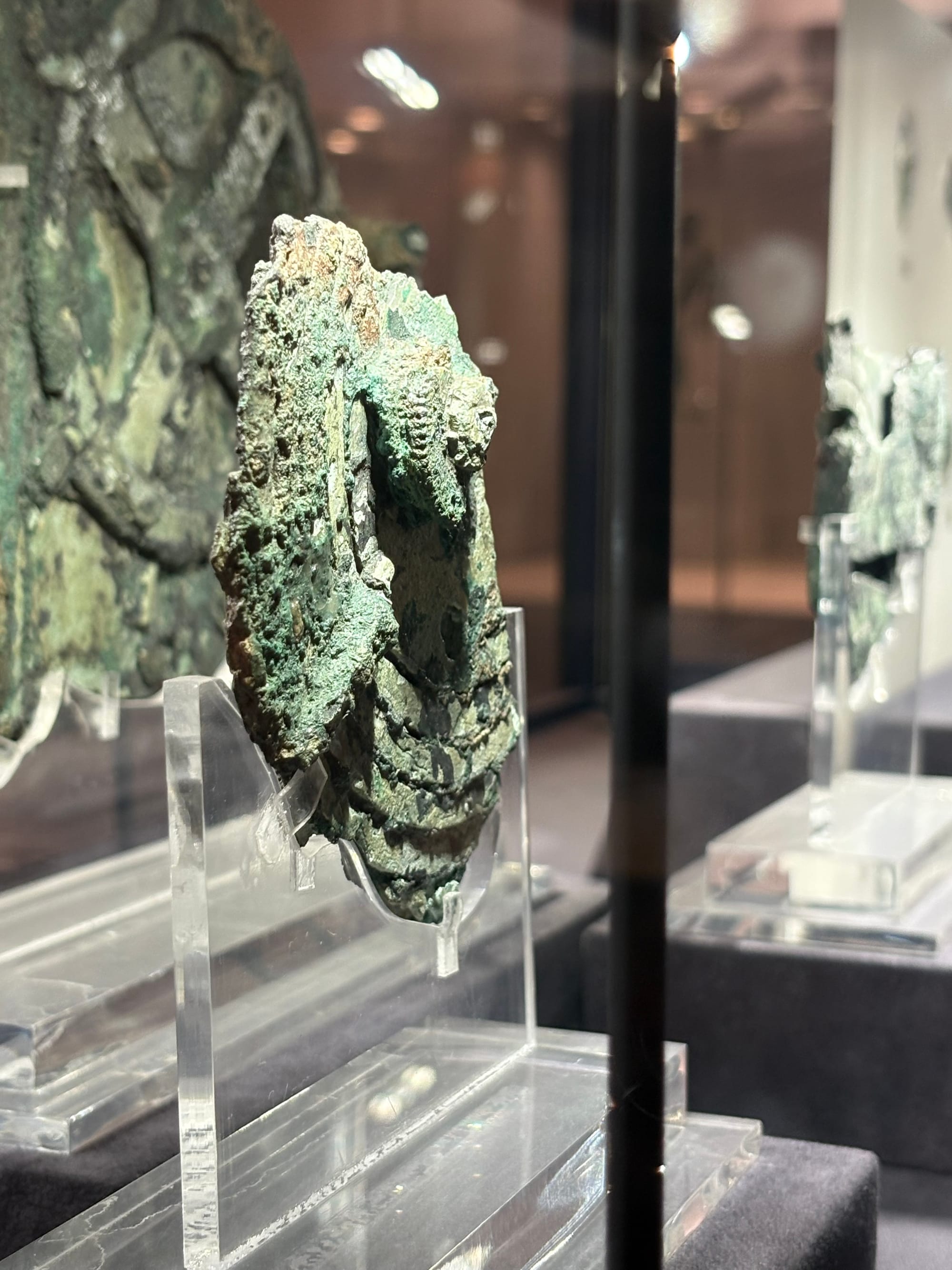
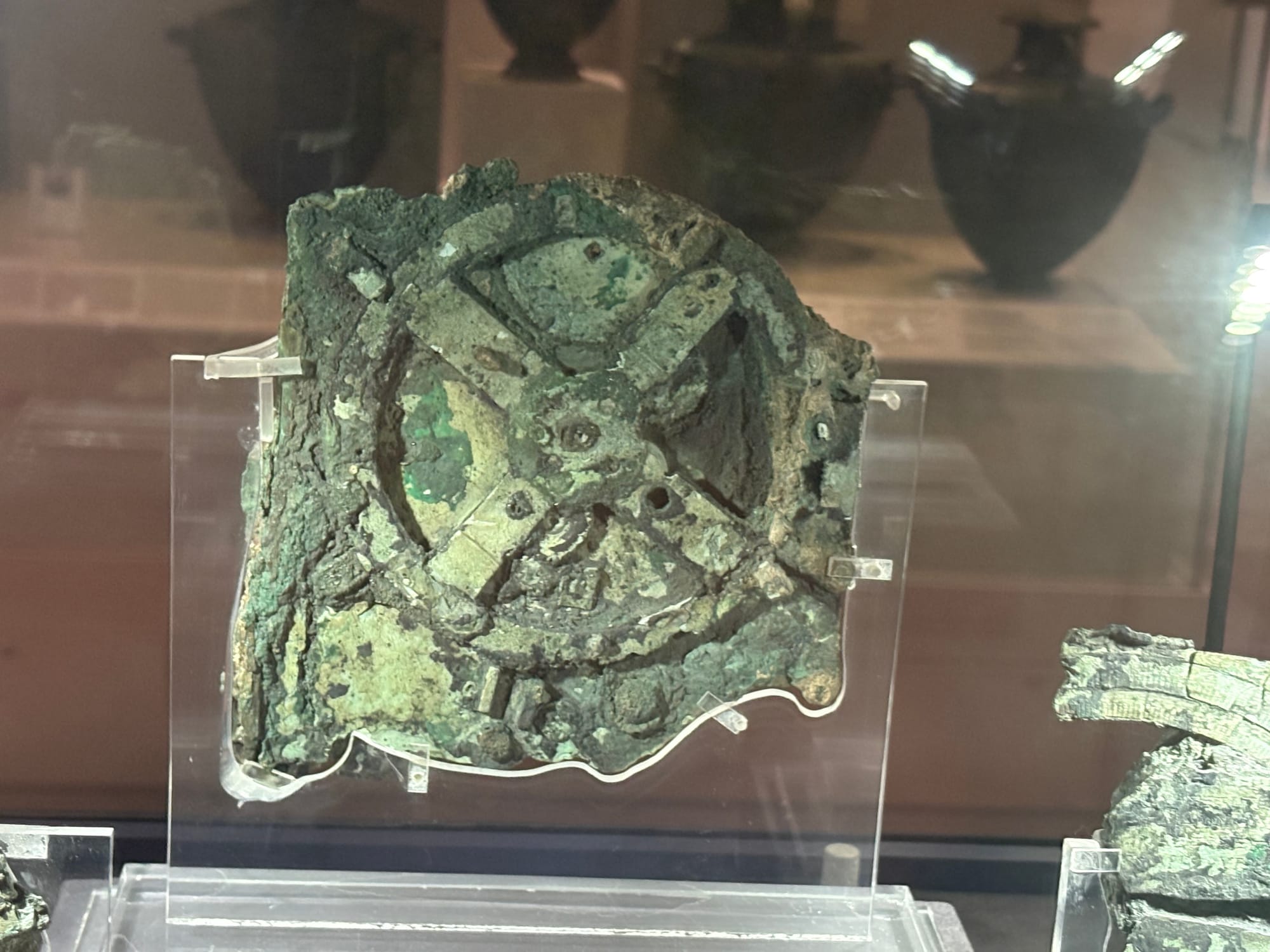
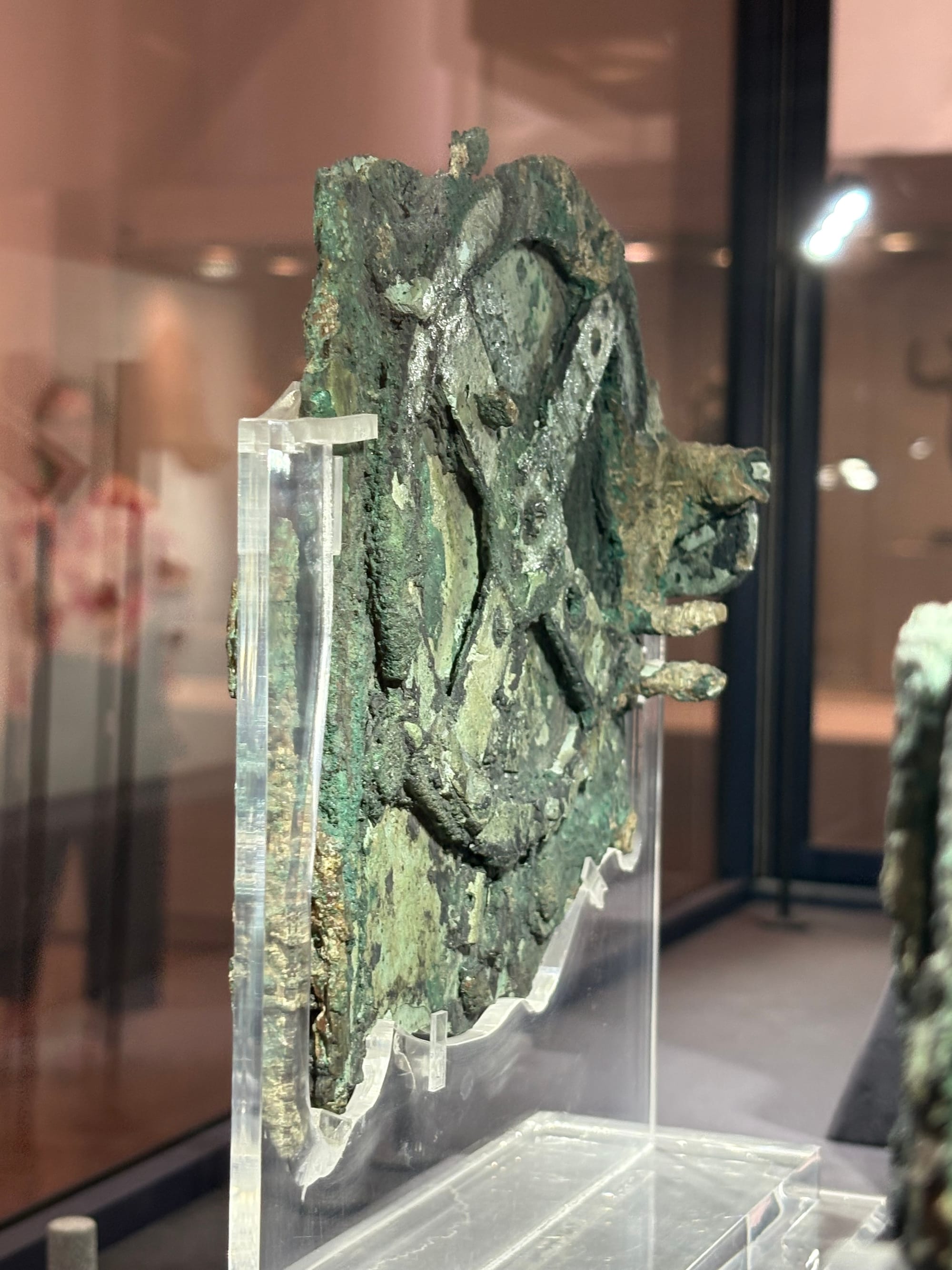
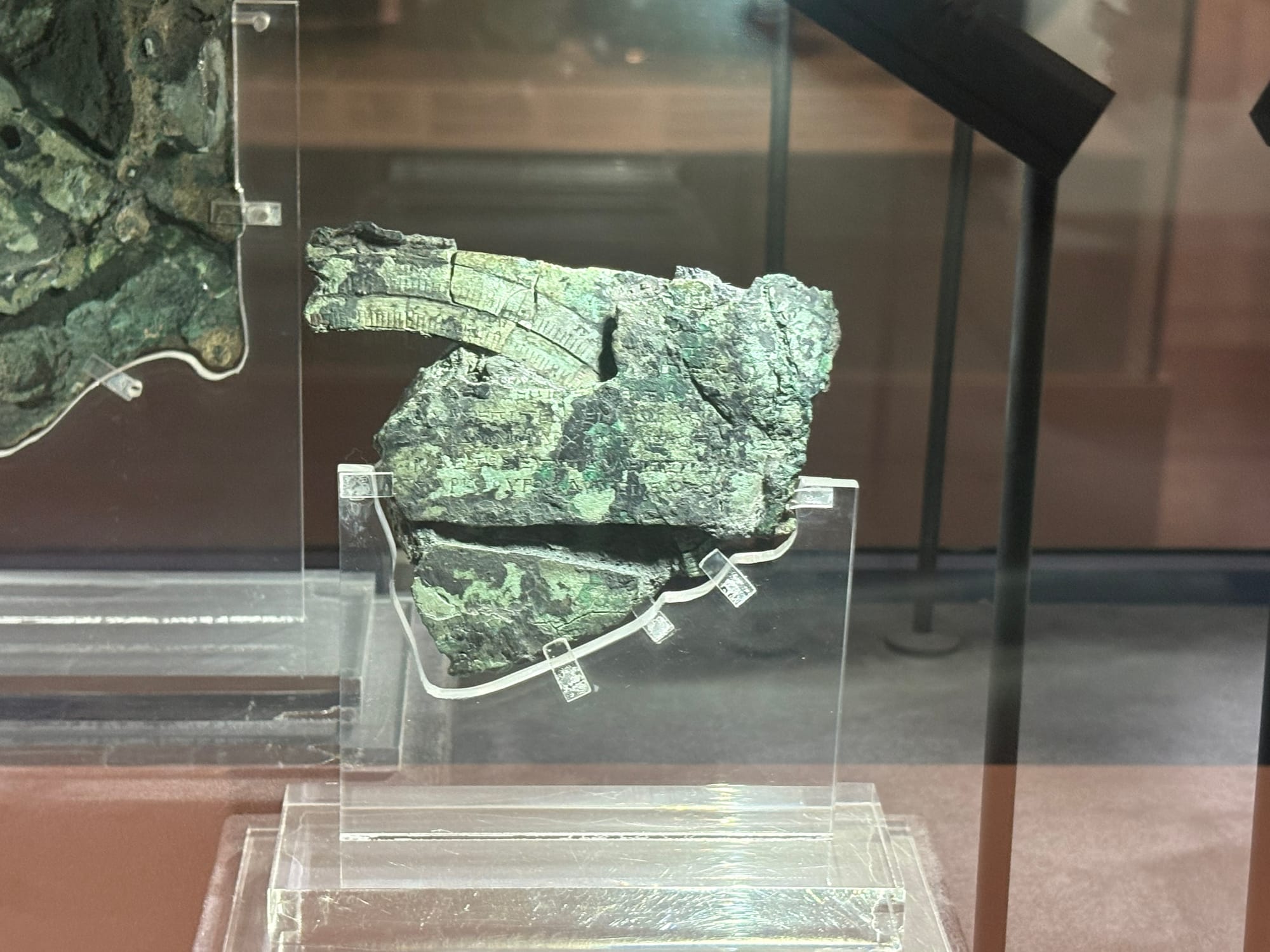
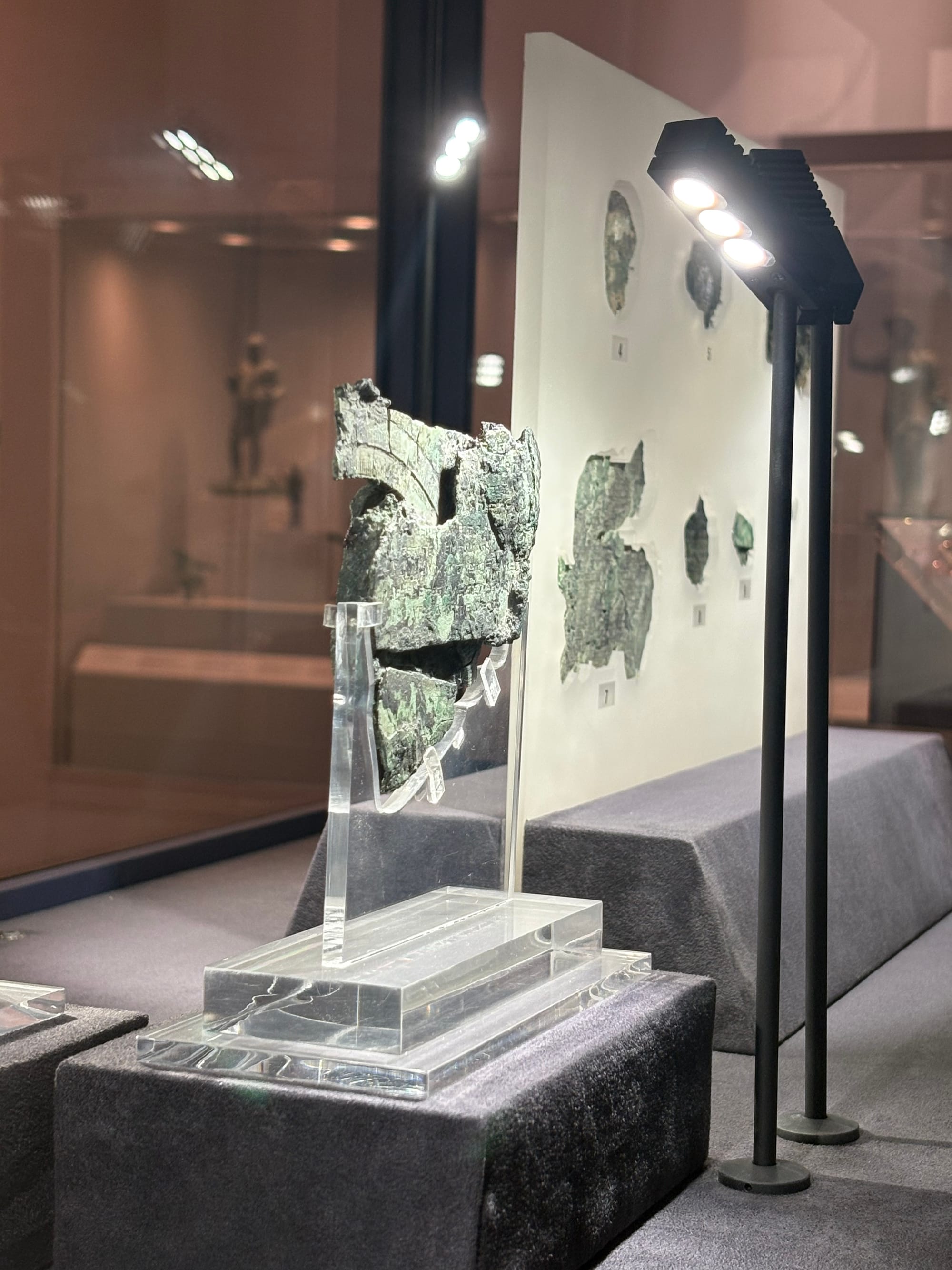
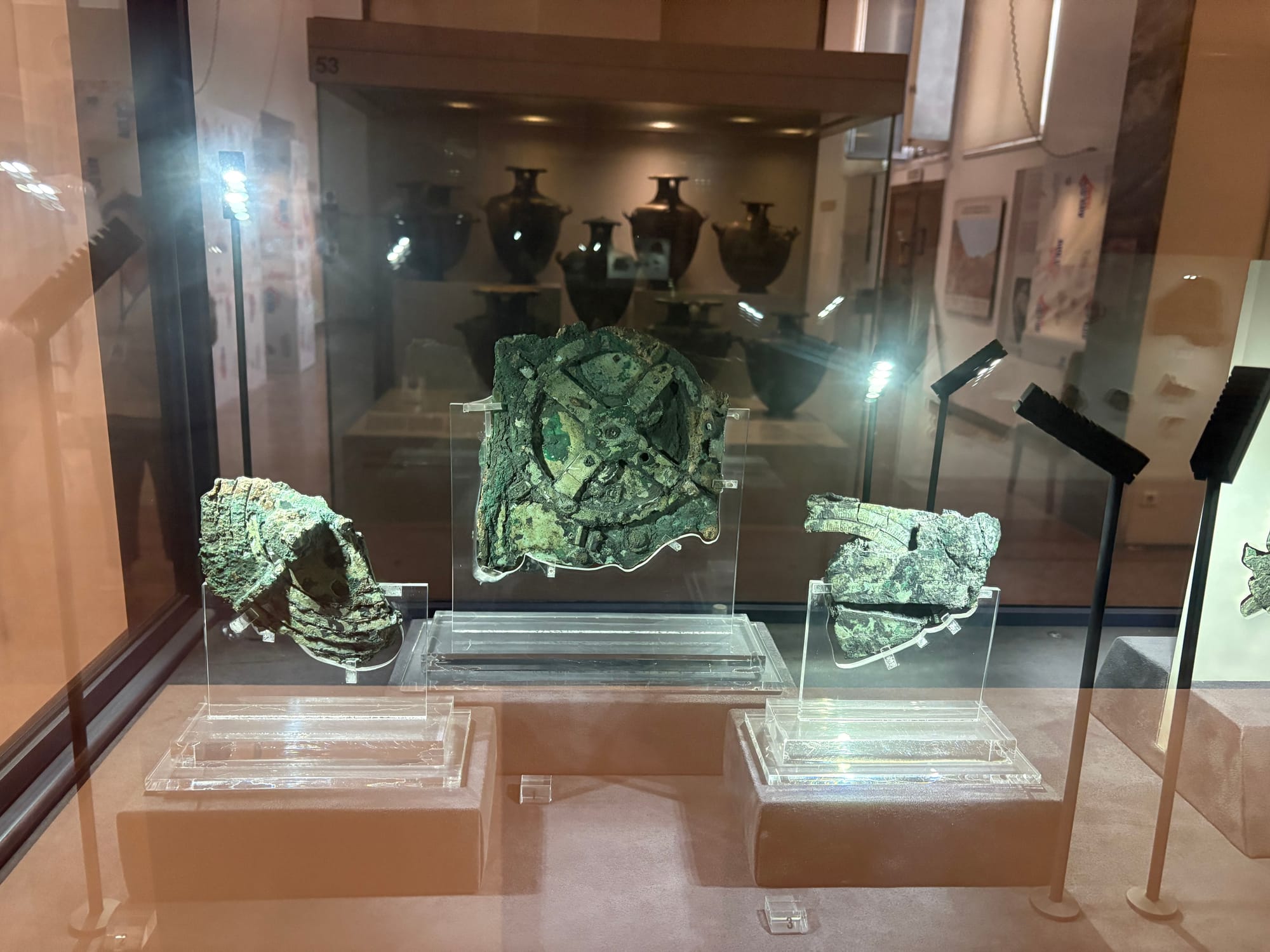
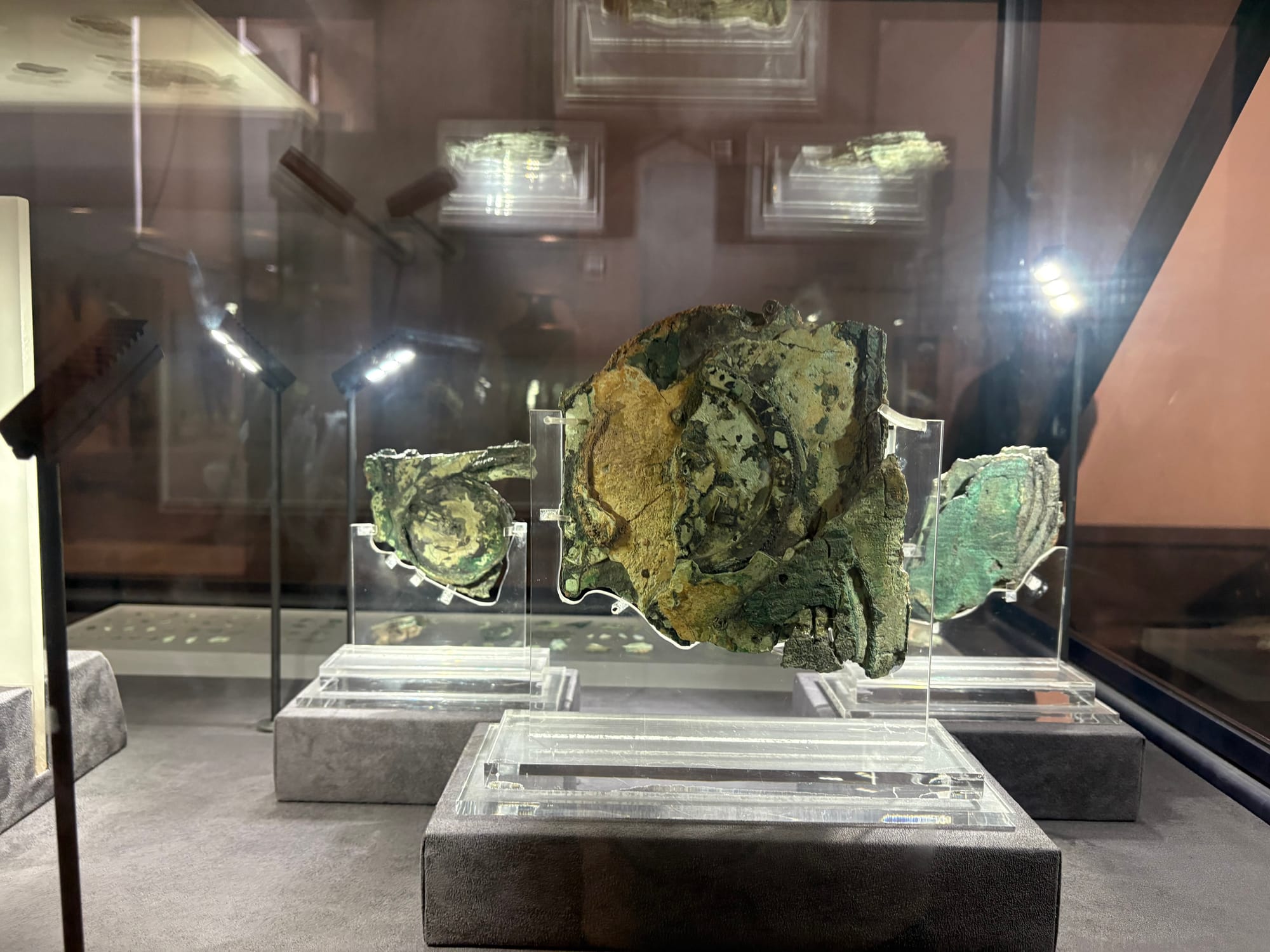
The three largest pieces of the Antikythera Mechanism
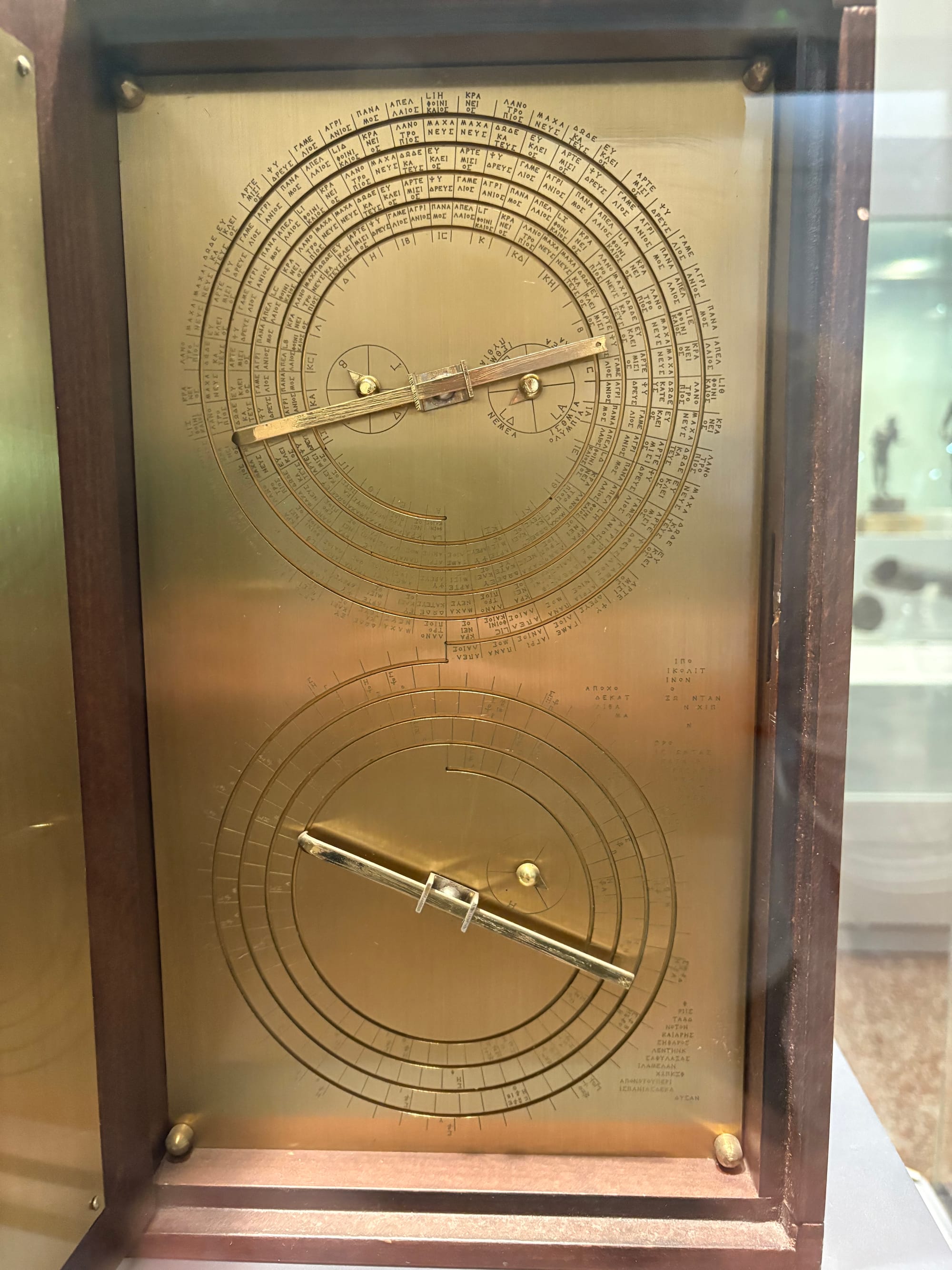
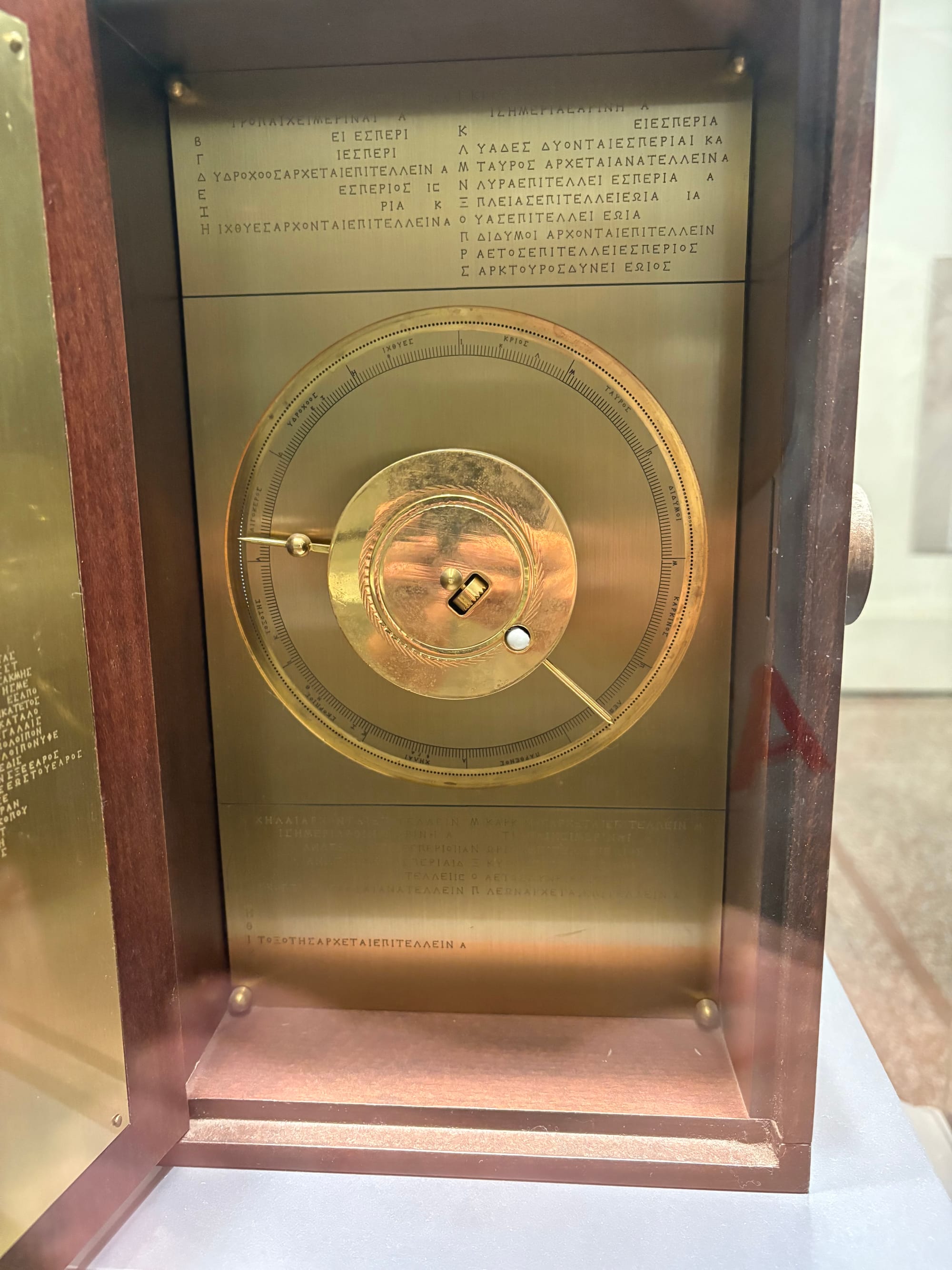
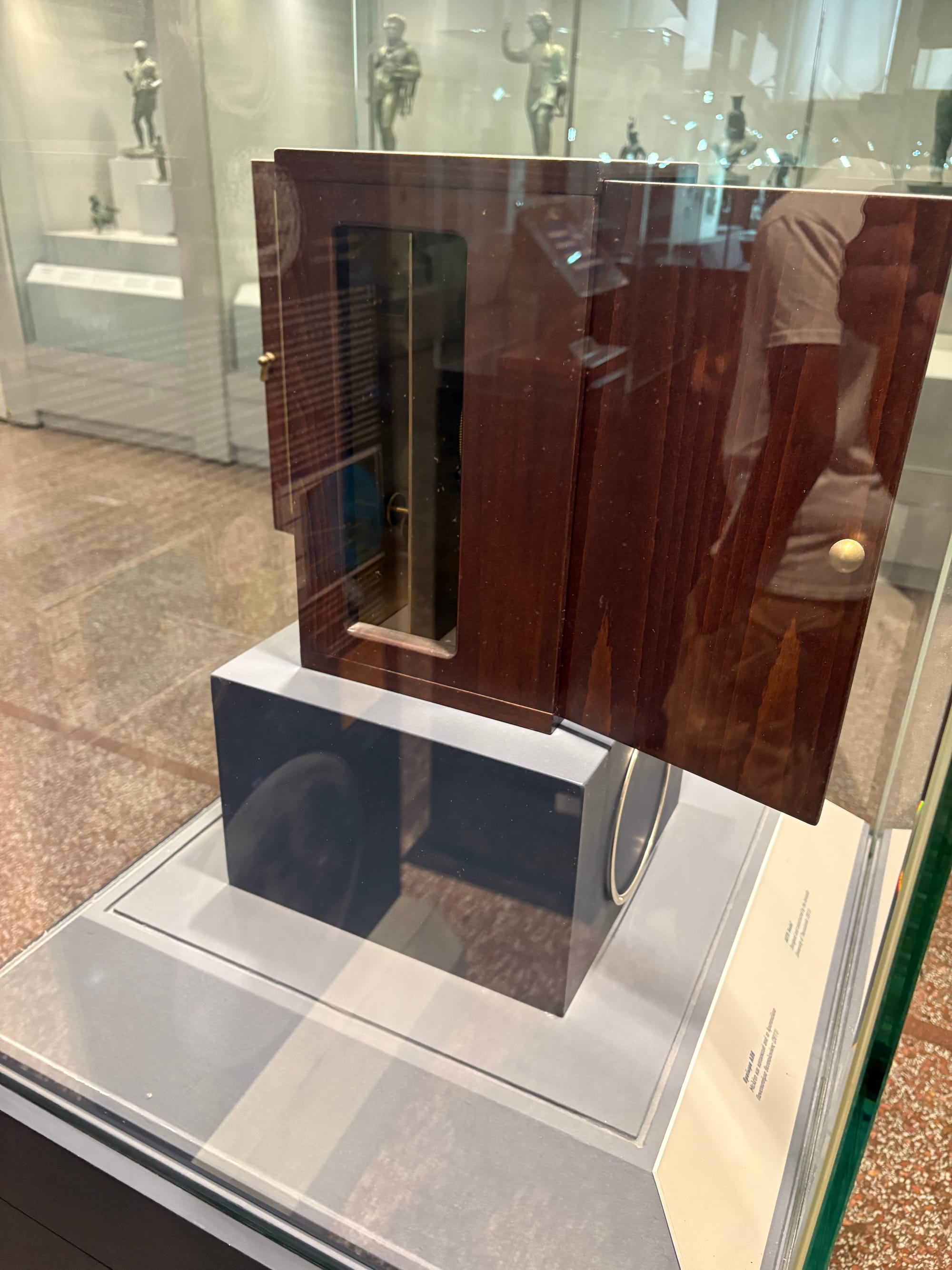
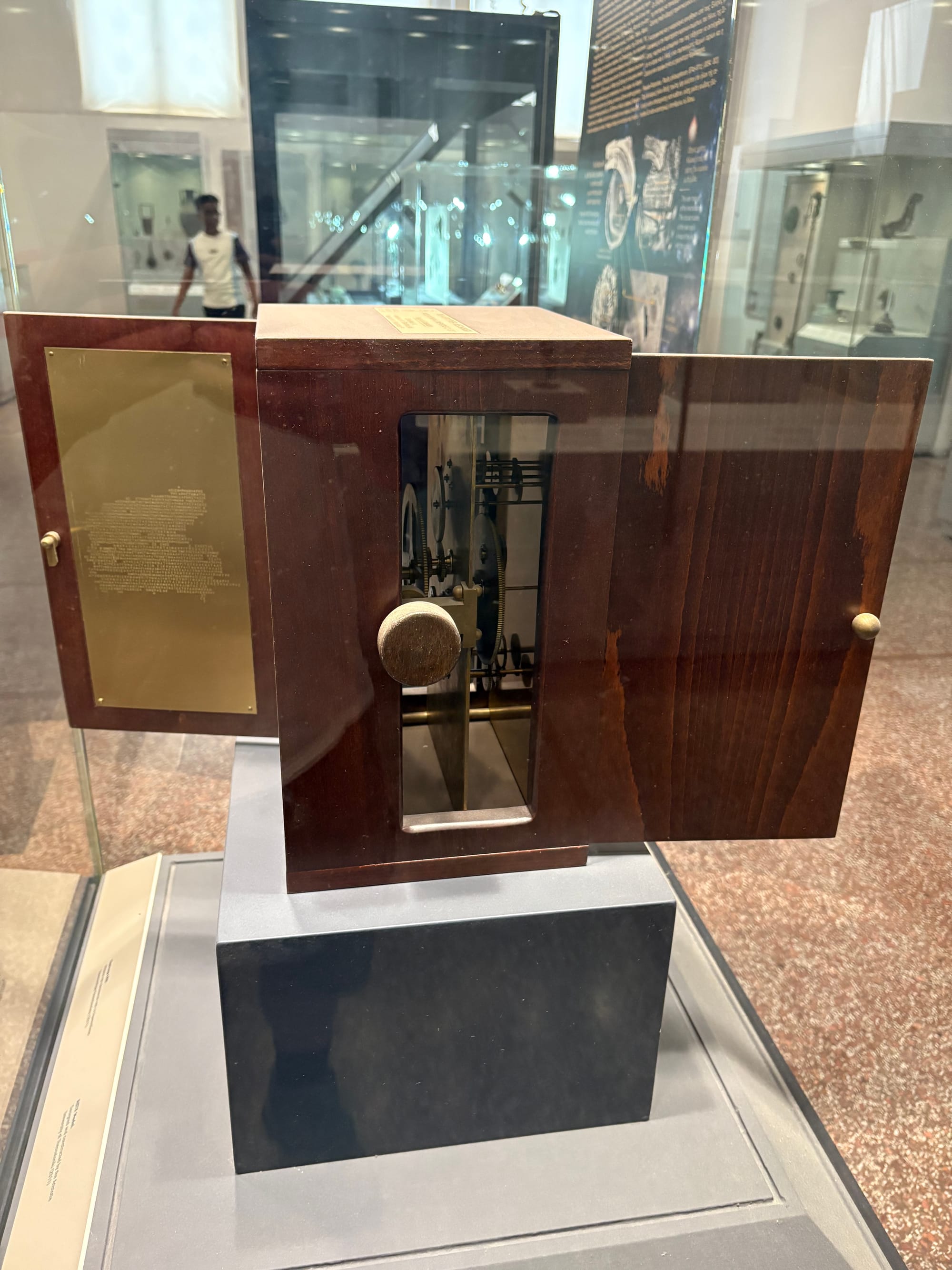
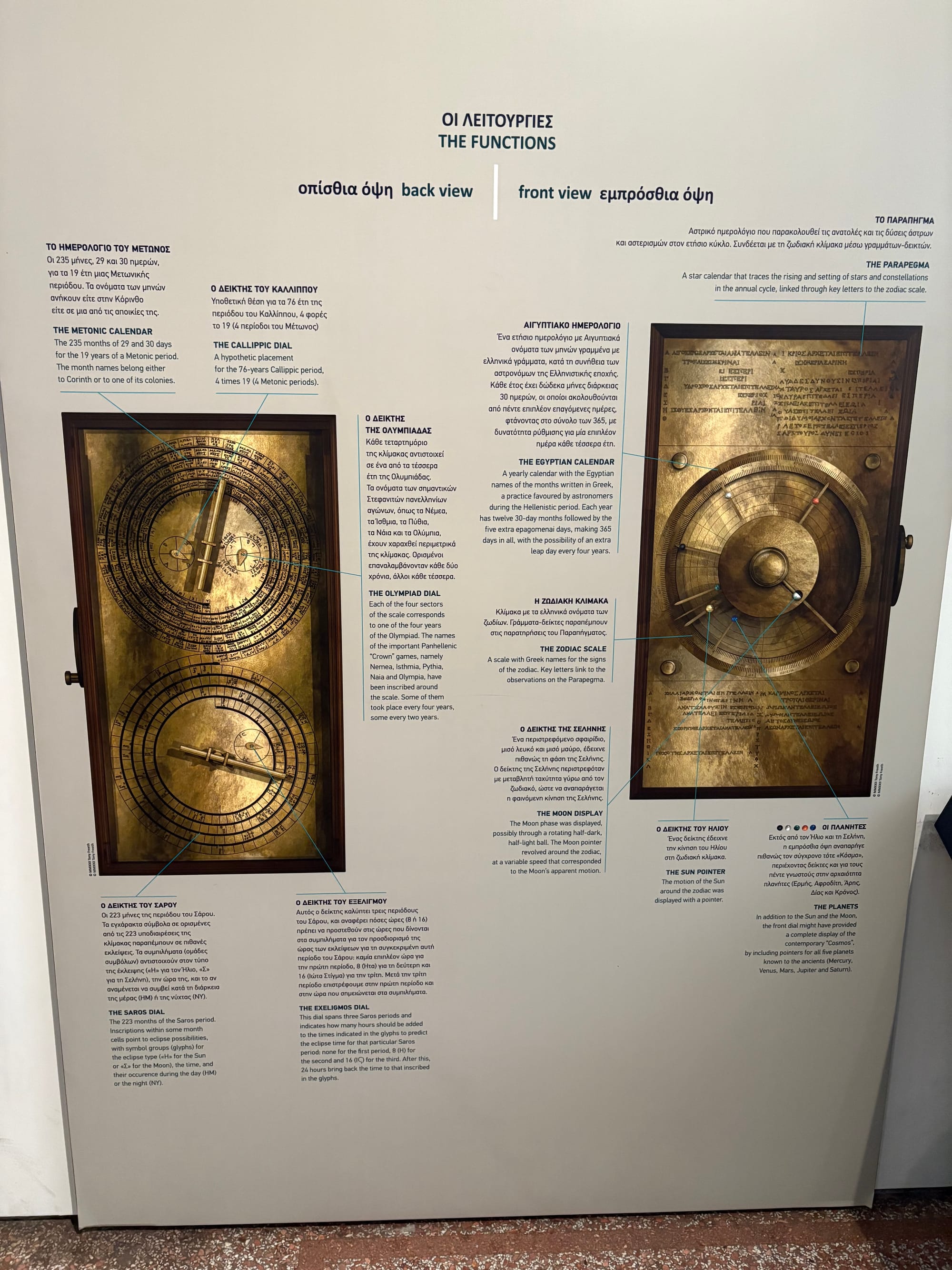
Alongside the pieces and in it's own case sits a modern reconstruction. Encased in a wooden box, it's accompanied by a helpful poster that explains how to read the various dials and hands.
If you're interested in more details of the movement, Michael Wright has a good video that walks you through his own Antikythera reconstruction.